
No products in the cart.

Sale
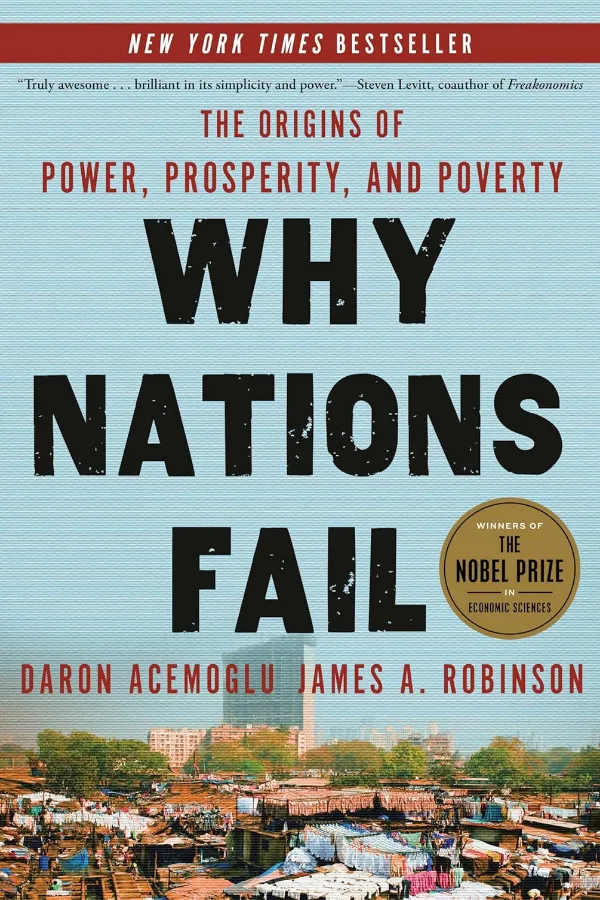
Why Nations Fail
Original price was: 435 MAD.160 MADCurrent price is: 160 MAD.
Why Nations Fail Morocco provides a groundbreaking answer to the question that has stumped experts for centuries: Why are some nations rich and others poor? Get your original edition from Mabooko today and enjoy Free Shipping and Cash on Delivery anywhere in Morocco.
Rupture de stock
Authors




Description
Why Nations Fail Morocco is a seminal work in modern economics and political science, providing a compelling answer to one of the most persistent questions in human history: Why do some countries prosper while others remain trapped in poverty? Written by the renowned Daron Acemoglu and James A. Robinson, this book distills fifteen years of original research into a narrative that is as accessible as it is profound. At Mabooko, we are proud to offer this original edition to our readers in Morocco, ensuring that you receive a high-quality, authentic book that serves as a vital resource for students, policymakers, and intellectuals alike.
Table of Contents
- Inclusive vs. Extractive Institutions
- Historical Evidence and Global Comparisons
- The Quest for Prosperity in a Modern World
- Why Choose Mabooko for Your Books in Morocco?
The Core Theory: Inclusive vs. Extractive Institutions
The central premise of Why Nations Fail Morocco revolves around the distinction between “inclusive” and “extractive” institutions. Acemoglu and Robinson argue that the wealth of a nation is not determined by geography, climate, or culture, but by the quality of its political and economic institutions. Inclusive institutions allow for the participation of the masses in economic activities, protect property rights, and encourage innovation. In contrast, extractive institutions are designed by a small elite to extract resources from the rest of society, ultimately stifling growth and leading to stagnation.
For readers in Morocco who are interested in the development of nations, this theory provides a clear lens through which to view global history. The authors explain how small institutional differences during critical historical moments—such as the Industrial Revolution or the Black Death—can lead to vastly different trajectories for nations over centuries. By purchasing Why Nations Fail Morocco from Mabooko, you are investing in a deeper understanding of the mechanisms that build or break societies.
Unrivaled Historical Insight and Analysis
What makes Why Nations Fail Morocco so persuasive is its staggering array of historical evidence. From the division of the city of Nogales between Arizona and Sonora to the decline of the Mayan civilization and the rise of modern China, the authors leave no stone unturned. They demonstrate that without political centralism and inclusive economic structures, long-term prosperity is impossible. This edition, available at Mabooko, preserves every map and chart in high detail, ensuring that the evidence is as clear as the argument itself.
The prose is professional yet engaging, making complex economic concepts understandable for the general reader. Whether you are analyzing the impact of colonialism or the future of emerging markets, the strategic depth of this book is unparalleled. It is a necessary addition to any serious library in Morocco, providing the intellectual tools needed to discuss the future of development with authority.
Building a Future of Prosperity
Beyond historical analysis, Why Nations Fail Morocco serves as a call to action for institutional reform. It emphasizes that political change is the prerequisite for economic success. As we navigate the challenges of the 21st century, the lessons contained in these 544 pages remain more relevant than ever. By making this international bestseller accessible to a wider audience in Morocco, Mabooko hopes to foster a culture of critical thinking and informed debate about the future of our society.
Get Your Original Copy from Mabooko in Morocco
Why should you choose Mabooko for your purchase of Why Nations Fail Morocco? The answer is simple: we prioritize the reader experience through authenticity and reliability. We understand that intellectuals and professionals in Morocco value the feel and durability of an original book. We guarantee that every book we sell is a genuine, original edition. Avoid the frustration of poor-quality prints and enjoy the professional craftsmanship that only a genuine book can provide.
Ordering from Mabooko is a seamless process designed specifically for the local market. We take great pride in our logistics, ensuring that your copy of Why Nations Fail Morocco reaches you in perfect condition, no matter where you are in the country. Our team is dedicated to enriching the Moroccan literary landscape by providing fast and reliable access to award-winning international titles.
Free Shipping and Cash on Delivery Across Morocco
Mabooko is committed to making great literature accessible and affordable. That is why we offer Free Shipping on every order of Why Nations Fail Morocco. We deliver to all major cities including Casablanca, Rabat, Marrakech, Tangier, and Agadir, as well as smaller towns across Morocco. You will never encounter hidden fees; the price you see is the final price you pay.
To provide you with total security, we also offer the convenience of Cash on Delivery (Paiement a la livraison). You can place your order for Why Nations Fail Morocco with complete confidence, knowing that you only pay when the book is physically in your hands. Trust Mabooko for your next literary journey and discover the definitive answer to the wealth and poverty of nations with Why Nations Fail Morocco today.
Reviews (0)

Original price was: 210 MAD.95 MADCurrent price is: 95 MAD.
Rebel Witch

Original price was: 425 MAD.160 MADCurrent price is: 160 MAD.
The World As Will And Representation, Volume I

Original price was: 180 MAD.105 MADCurrent price is: 105 MAD.
How the Body Works: The Facts Simply Explained

Original price was: 310 MAD.125 MADCurrent price is: 125 MAD.
The Adweek Copywriting Handbook: The Ultimate Guide to Writing Powerful Advertising and Marketing Copy from One of America’s Top Copywriters

Original price was: 299 MAD.150 MADCurrent price is: 150 MAD.
Never Finished

Original price was: 175 MAD.85 MADCurrent price is: 85 MAD.
Self-Love Workbook for Women

Original price was: 380 MAD.165 MADCurrent price is: 165 MAD.
Memories, Dreams, Reflections

Original price was: 220 MAD.100 MADCurrent price is: 100 MAD.
Building a StoryBrand

Original price was: 310 MAD.125 MADCurrent price is: 125 MAD.
The Pivot Year

Original price was: 295 MAD.120 MADCurrent price is: 120 MAD.
The Child in You: The Breakthrough Method for Bringing Out Your Authentic Self

Original price was: 230 MAD.105 MADCurrent price is: 105 MAD.
Badass Habits

Original price was: 265 MAD.125 MADCurrent price is: 125 MAD.
Cristiano Ronaldo La biographie

Original price was: 200 MAD.110 MADCurrent price is: 110 MAD.
I Wasn’t Ready to Say Goodbye

Original price was: 220 MAD.100 MADCurrent price is: 100 MAD.
Methods of Persuasion: How to Use Psychology to Influence Human Behavior
Original price was: 300 MAD.140 MADCurrent price is: 140 MAD.
Reviews
There are no reviews yet.