
Votre panier est vide.

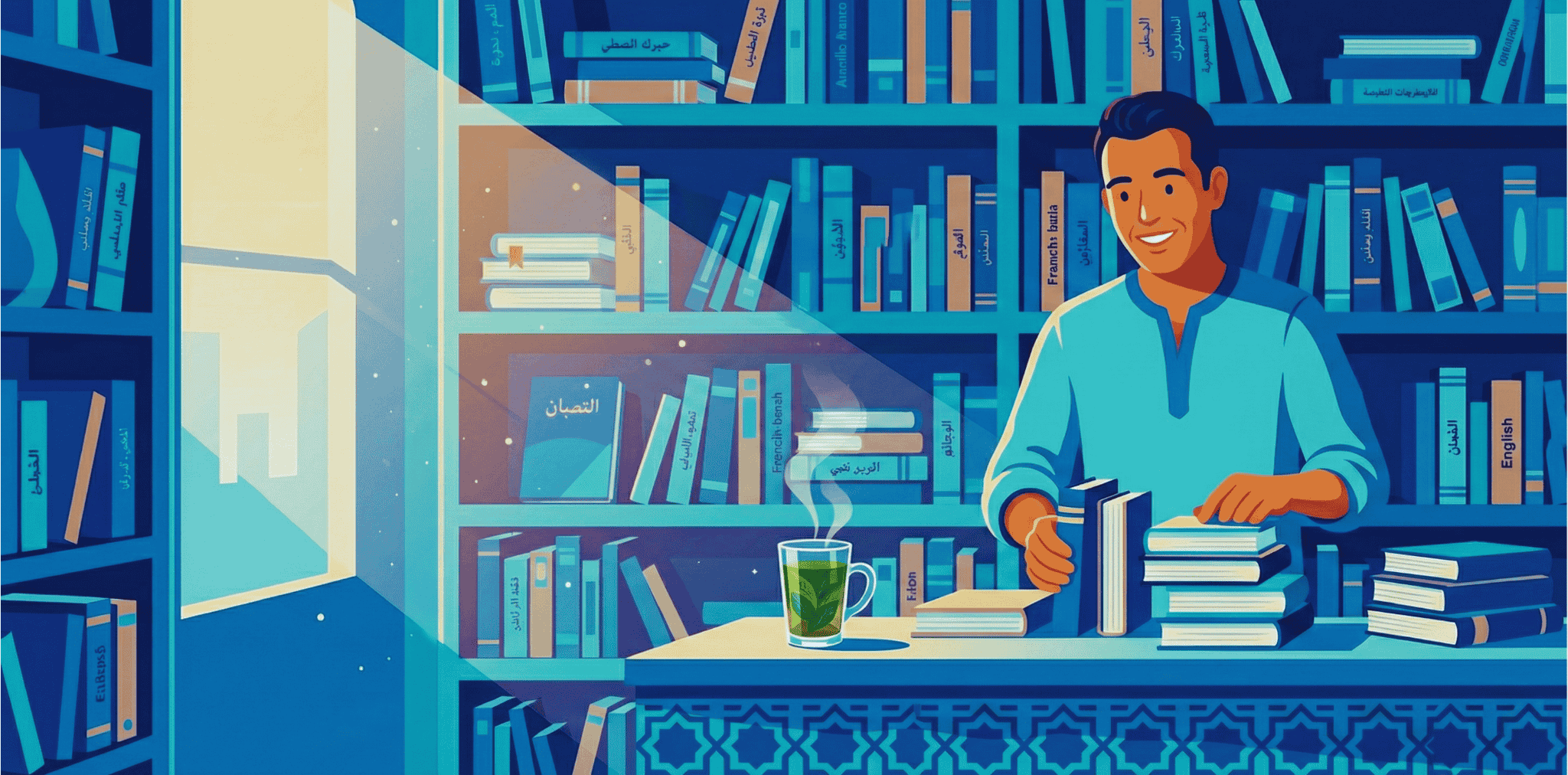
Imagine waking up every day surrounded by stories. Not just the ones written on paper, but the living, breathing stories of the people who walk through your door. Being a bookstore owner in Morocco isn’t just about selling paperbacks; it’s about guarding a gateway to culture, history, and imagination. It is a quiet, rhythmic life, punctuated by the smell of mint tea and old paper.
What Is It Like to Run a Bookstore in Morocco?
Running a bookstore here is different from anywhere else in the world. In many Western countries, bookstores are quiet retail spaces. Here, they are community hubs. The vibe is a mix of a library, a café, and a town square.
As a bookstore owner in Morocco, you are part merchant, part librarian, and part therapist. You aren’t just scanning bar-codes. You are engaging in a slow dance with Moroccan culture. Time moves a little differently here. Customers don’t always rush in and out. They linger. They ask how your family is doing before asking for the price of a novel.
The atmosphere is often filled with a blend of languages. You might hear French, Arabic, Amazigh, and increasingly, English, all within five minutes. It is a space where tradition meets modernity. While the business has its struggles—which we will get to later—the feeling of being surrounded by knowledge in a country with such a rich history of storytelling is incredibly grounding.
A Typical Morning Routine
1. Opening the Store and Setting Up
The daily routine bookstore owner life starts early, but not frantically. The morning usually begins with the sound of metal shutters rolling up. The air is cool, and the street outside is just waking up. The first task is always the same: let the light in and sweep the dust away. Morocco is a dusty place, and books are magnets for it.
Once the floor is clean, the most important ritual begins: making the tea or coffee. You cannot welcome the first customer without the scent of something brewing. It sets the mood. I usually check the display window to make sure the sun hasn’t faded the covers. I arrange the new arrivals front and center. It’s a quiet moment of peace before the city truly comes alive.
2. Organizing Books by Genre and Language
Organizing a bookstore in Morocco is a unique geometric puzzle. Why? Because we read in two different directions.
Books in Arabic open from right to left. Books in French and English open from left to right. This means the shelves need to be organized carefully to avoid visual chaos. I usually dedicate one entire wall to books in Morocco written in Arabic—ranging from classical theology to modern novels. The opposite wall holds the French literature, which is still a massive part of our reading diet.
Then there is the growing English section. I spend a good twenty minutes every morning straightening these shelves because they are becoming the most popular, especially with younger readers. Keeping these languages distinct but accessible is an art form.
3. Morning Interactions with Customers and Regulars
By 10:00 AM, the regulars start to drift in. The first few visitors usually aren’t buying anything immediately. They are neighbors, retired teachers, or students skipping a morning lecture.
There is the “newspaper man” who comes in to discuss the headlines. There is the university student looking for a specific, obscure philosophy text. These morning chats are essential. We discuss the weather, the traffic, and the latest literary prizes. In Morocco, you have to build a relationship before you build a sale. These interactions are the heartbeat of the shop. They remind me that books are just vehicles for human connection.
Exploring Moroccan Literary Culture through Books
1. Popular Moroccan Authors and Their Works
To understand the inventory, you have to understand the soul of the country. Moroccan reading culture is deeply proud of its native sons and daughters. Authors like Tahar Ben Jelloun et Fatema Mernissi are staples. Their books are never far from the front counter.
But it’s not just the famous names. Readers often come looking for the raw, gritty realism of Mohamed Choukri, specifically his autobiography For Bread Alone. It’s a book that shocked the country years ago and remains a bestseller today. Newer voices, like Leïla Slimani, who writes in French, bridge the gap between Morocco and Europe, drawing in readers who want modern perspectives on identity and society.
2. Literature in Arabic, French, and Amazigh Languages

Morocco is a linguistic mosaic, and the bookstore reflects that.
- Arabic: This is the heart of the store. We stock everything from the Quran and classical poetry to modern political thrillers.
- French: Due to history, French remains the language of the elite and the academic. Many Moroccan authors still choose to write in French to reach an international audience.
- Amazigh: There is a slow but beautiful rise in literature written in Tifinagh (the Amazigh script). It’s vital to stock these to honor the indigenous culture of North Africa.
3. How Local Culture Influences Book Selections
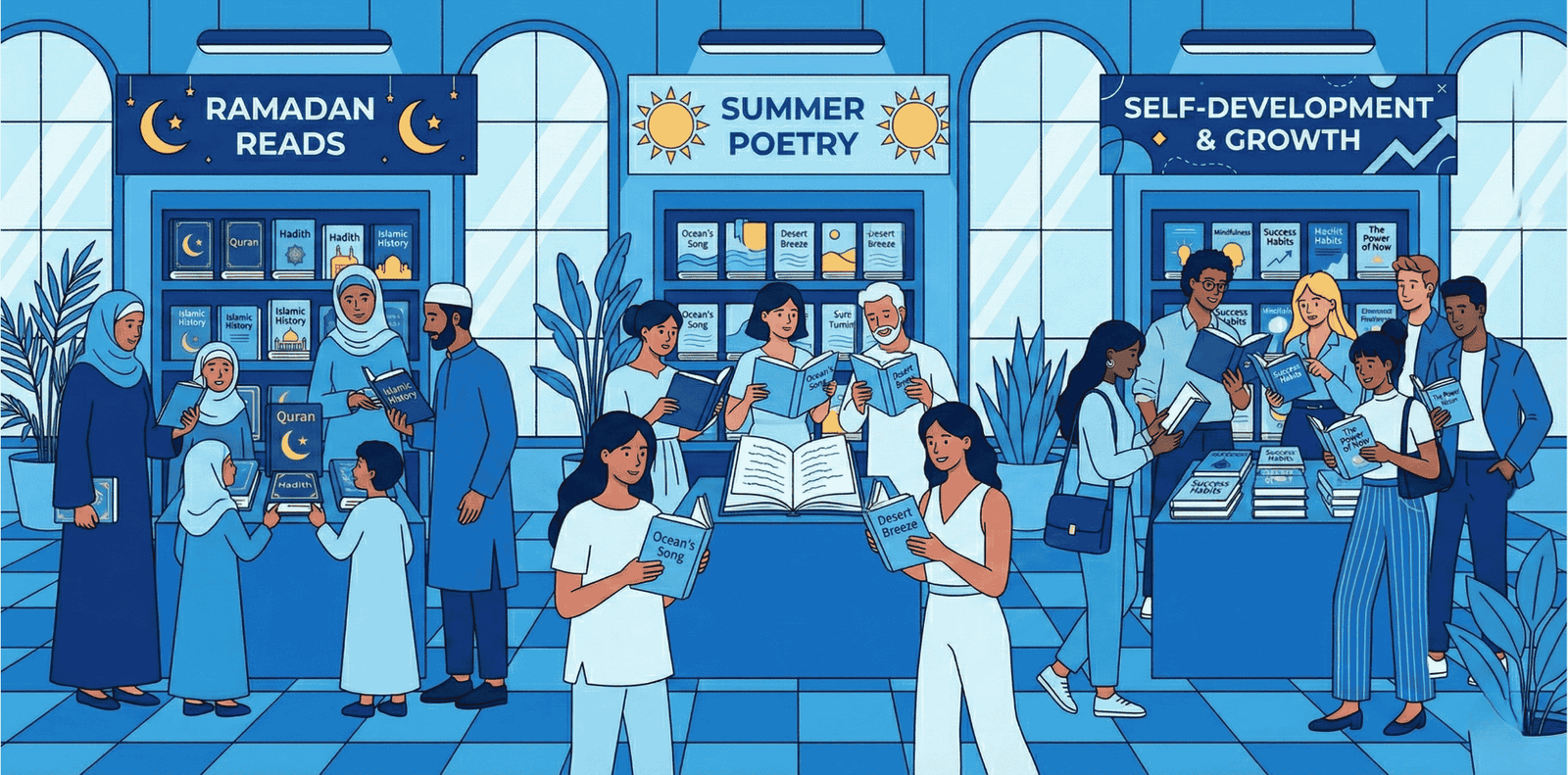
Religion and tradition play a huge role in what books move off the shelves. During Ramadan, religious texts and history books fly out the door. In the summer, people want lighter reads or poetry.
However, there is a fascinating shift happening. Young people are looking for books on self-development, psychology, and entrepreneurship. They want to modernize while keeping their roots. As a bookseller, I have to walk that line—stocking the classics that define us while making space for the new ideas that challenge us.
Interacting With Readers and Regulars
1. Recommending Books
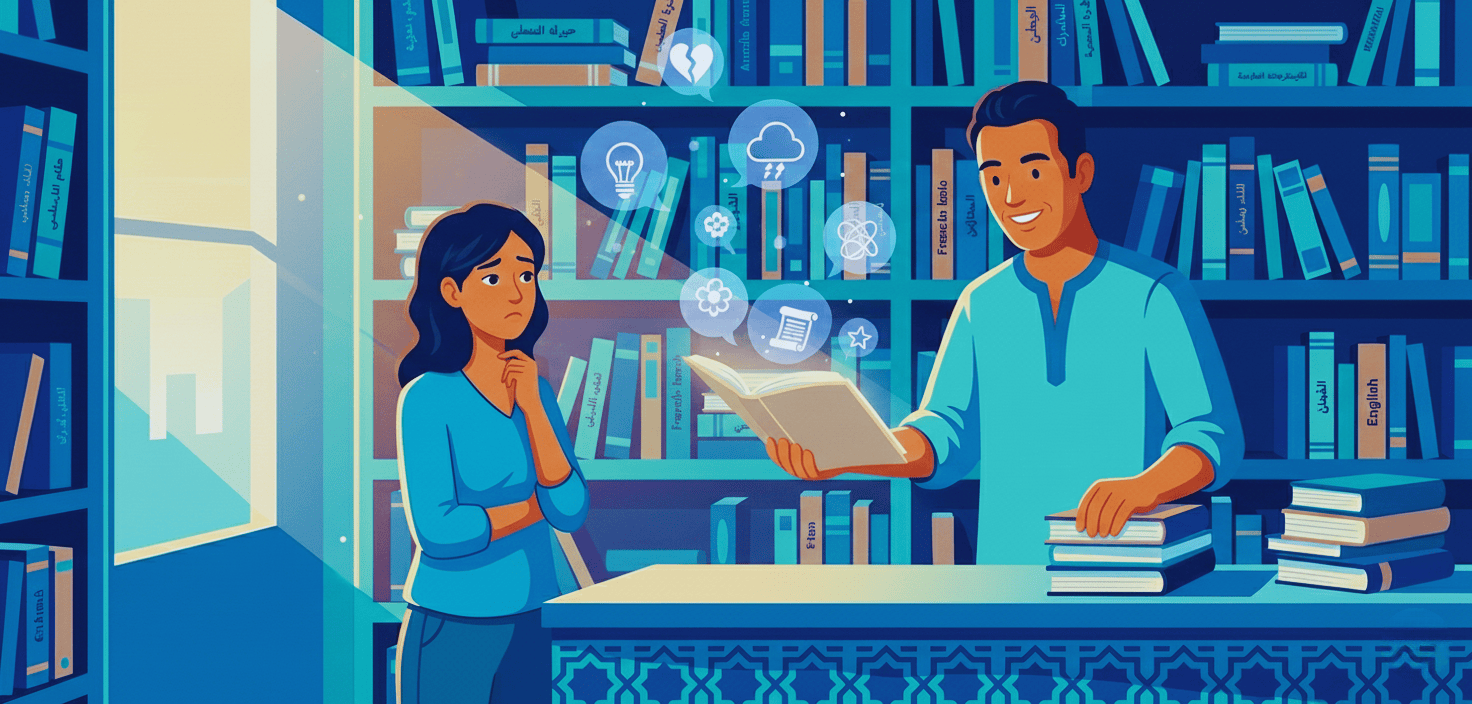
This is the best part of the job. A customer walks in, looks lost, and asks, “I want something that feels like real life.”
If they are a tourist, I might hand them Paul Bowles, but if they want the real Morocco, I steer them toward Driss Chraïbi. Recommending books here requires intuition. You have to read the person, not just the back cover. I often act as a matchmaker between a reader’s current mood and the perfect story.
2. Hosting Conversations and Informal Debates
A bookstore in Morocco is rarely silent. It is a place for debate. Two customers reaching for the same book on history might end up in a thirty-minute discussion about colonialism or politics.
I don’t shush them; I listen. Sometimes I join in. These informal debates are where Moroccan culture breathes. We might argue about the translation of a specific word or the ending of a novel. It turns the store into a living classroom where everyone is both a student and a teacher.
3. Helping Tourists Discover Local Authors
Travelers often come in looking for The Alchemist by Paulo Coelho because they associate it with the desert. While it is a fine book, I take it as a challenge to introduce them to Moroccan voices.
I tell them, “If you want to understand the silence of the desert, read Ibrahim al-Koni (a Libyan author popular here) or the poetry of Abdellatif Laabi.” Seeing a tourist leave with a book by a local author feels like a small victory. It ensures they take a piece of our true voice home with them, rather than just a souvenir.
Managing Book Inventory
1. Choosing Books From Local Publishers
Supporting local publishing houses is a duty. There are small presses in Casablanca and Rabat doing incredible work to keep costs down and quality up. I make it a point to order from them directly. It keeps the money in the local economy and ensures that books in Morocco remain accessible to students who can’t afford expensive imports.
2. Selecting Imported Titles
Selecting books is an art itself, blending local and global demands. Owners carefully choose titles from Moroccan publishers to highlight emerging voices, while imported books offer international bestsellers and classics.
3. Tracking What Sells and What Doesn’t
You would be surprised by what sits on the shelf and what disappears.
- Sells: Classics, test prep books, religious history, and increasingly, English Manga.
- Stalls: Expensive coffee-table books and very niche Western political biographies. Tracking this isn’t always done with high-tech software. mostly, it’s done with a notebook and a sharp memory. If a book sits for six months, I move it to the “sale” bin to make room for fresh stories.
How Bookstore Owners Support Local Culture
1. Hosting Events
To keep the Moroccan reading culture alive, we have to make reading social. I try to host book signings at least once a month. When a local author releases a new collection of short stories, we clear the center of the shop, put out chairs, and brew a massive pot of tea. These events turn the solitary act of reading into a collective celebration.
2. Encouraging New Writers
Young writers often come in with shy smiles, holding manuscripts or self-published pamphlets. I never turn them away. I offer to display their small books near the register. It gives them confidence. Every famous author started as an unknown with a dream, and bookstores are the incubators for those dreams.
3. Collaborating With Schools and Cultural Centers
I work closely with local teachers. If a school is doing a unit on African literature, I make sure I have enough copies of Things Fall Apart ou So Long a Letter. We also partner with French and American cultural centers for reading competitions. It is about building an ecosystem where reading is seen as cool and necessary for the next generation.
The Business Side of the Bookstore
Let’s be honest: you don’t open a bookstore to get rich. The margins on books are thin. After paying for rent, electricity, taxes, and the inventory itself, the profit is modest.
We are constantly competing with digital distractions. Why buy a book when you can watch TikTok? Or worse, why buy a book when you can download a pirated PDF for free? Piracy is a huge issue in the Arab world.
To survive, I have to diversify. I sell high-quality stationery, journals, and sometimes local art. These items have better profit margins and help subsidize the books. It is a balancing act between passion and paying the bills. But when you see a customer’s eyes light up, the spreadsheet worries fade into the background for a moment.
Challenges of Being a Bookstore Owner in Morocco
The life of a bookstore owner Morocco comes with distinct hurdles.
- Literacy Rates: While improving, literacy is still a challenge in some areas. We have to work harder to convince people that reading is accessible.
- The “Elite” Stigma: Many people think bookstores are only for the rich or the highly educated. I work hard to break this down by keeping the door open and the vibe casual.
- Logistics: Getting books delivered can be a nightmare. Shipments get stuck in customs, or orders arrive damaged. You need the patience of a saint to deal with distribution logistics here.
- Language Barriers: managing stock in three languages means I need to be tri-lingual, or at least hire staff who are. It triples the workload for cataloging and organizing.
The Joys and Rewards of Bookstore Life
Despite challenges, the joys of bookstore ownership are profound. Sharing stories that inspire, witnessing regular customers’ literary journeys, and contributing to Moroccan culture create lasting fulfillment.
The bookstore becomes a heartfelt part of both the community and the family of readers it serves
It is the smell of the shop—that distinct mix of vanilla-scented old paper and fresh ink. It is the feeling of being a guardian of stories. In a world that is moving too fast, the bookstore is a sanctuary of slowness. Every time I hand a book to a customer, I feel like I am handing them a ticket to another world. That feeling never gets old.
Tips for Travelers Visiting Moroccan Bookstores
If you are a book lover visiting Morocco, here is how to make the most of it:
- Don’t Be Intimidated: Even if you don’t speak Arabic or French, walk in. Most owners speak some English and love to chat.
- Look for the “Bouquinistes”: In cities like Rabat and Casablanca, there are street markets selling used books. You can find rare gems here for pennies.
- Haggling: In a proper shop with price tags, you generally do not haggle on new books. However, in the used book markets on the street, bargaining is expected!
- Ask for “Maghreb” Literature: Ask specifically for books by North African authors translated into English. It’s the best souvenir you can buy.
Recommended Moroccan Books to Explore
If you want to dive into Moroccan culture before or during your trip, here are my top picks:
1. Fiction
- Spring of Andalusia (ربيع الندلس) by Mohamed Zefzaf: A raw portrayal of urban poverty and resilience in Morocco, blending gritty realism with poignant human struggles.
- Secret Voices of the Street by Driss Chraibi: Explores identity and family tensions through a young Moroccan’s eyes, capturing mid-20th-century societal shifts
2. Non-Fiction
- La Nuit de Feu (Night of Fire) by Tahir Shah: A personal journey of spiritual awakening in Morocco’s deserts, blending memoir with cultural discovery.
- The Moroccan Sacrifice (القربان المرّوي جوهر) by Mohamed Joher: Offers deep insights into Moroccan history and social customs from an insider’s perspective.
3. Poetry and Classics
- The Count of Monte Cristo (الكونت دي مونت كريستو) by Alexandre Dumas: Available in Arabic editions on the shop, this timeless tale of revenge and redemption resonates widely in Moroccan literary circles.
- Poetry Council (مجلس الشعر) collections: Features works by contemporary Moroccan poets like those in Eastern Poem by Mohamed Al-Nasir (قصيدة شرقية لمحمد الناصر), evoking regional heritage and emotion.
Frequently Asked Questions (FAQ)
1. What languages are most bookstore titles in?
The mix is usually about 40% Arabic, 40% French, and 20% English, though English is growing fast.
2. Do Moroccan bookstores carry English books?
Yes! Almost all modern bookstores in cities like Marrakech, Casablanca, Rabat, and Tangier have a dedicated English section.
3. Which Moroccan authors are most popular?
Tahar Ben Jelloun, Fatema Mernissi, Mohamed Choukri, and Leila Slimani are the titans of Moroccan literature.
4. Are books expensive in Morocco?
Locally published books are very affordable (often $5 to $10). Imported books from Europe or the US are more expensive due to taxes and shipping ($15 to $25).
5. Can tourists easily find translated Moroccan literature?
Yes. Bookstore owners know that tourists want local stories, so we stock English translations of the major Moroccan works.
6. Do bookstore owners host cultural events?
Yes, many independent bookstores host signings, readings, and philosophy nights. Check their Facebook or Instagram pages for schedules.
7. What genres are trending in Morocco?
Self-help, business, and young adult fantasy are currently trending heavily among the youth.
8. Do independent bookstores accept international credit cards?
Most established shops in city centers do. However, smaller stalls or used book markets are strictly cash-only.
