

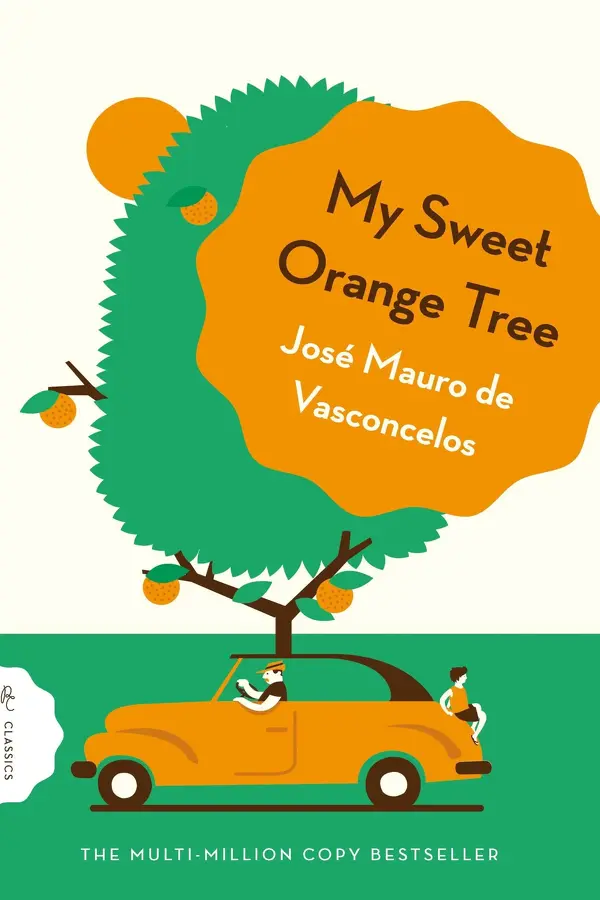
My Sweet Orange Tree
Plage de prix : 90,00 د.م. à 105,00 د.م.
Dans un quartier pauvre du Brésil, Zezé, un enfant espiègle et intelligent, trouve dans un petit oranger appelé "Minguinho" un refuge pour sa vie pleine de défis. Son voyage commence avec l'arbre, auquel il parle et partage ses secrets, tout en découvrant une amitié inattendue avec un vieil homme qui lui donne l'amour que son père lui a refusé. Mais la vie lui réserve des épreuves difficiles qui le changeront à jamais. Le roman montre comment les enfants font face à la douleur avec l'imagination, et comment les relations humaines font partie de leur croissance. C'est une histoire d'innocence, de perte et d'espoir qui perdure même dans l'obscurité. À travers les yeux de Zezé, nous apprenons que l'amour peut venir d'endroits inattendus, et que même les choses les plus simples peuvent avoir une signification profonde. Le roman touche le cœur des lecteurs avec honnêteté et émotion pure, et les amène à reconsidérer leur façon de voir le monde qui les entoure. 🍊💔📚
Authors

Description
The novel takes place in a poor neighborhood in Brazil, where Zezé lives, a five-year-old child who enjoys sharp intelligence, vast imagination, and innocence that makes him see the world in a different way. Zezé faces the challenges of a difficult life between a family burdened by poverty and harsh social conditions, but he finds in a small orange tree in his home courtyard a friend who hides his secrets and shares his dreams. The tree is called “Minguinho” and he deals with it as a living being who understands him, which reflects his deep need for affection and belonging. The novel shows how the child resists pain with imagination, and how attachment to a simple tree turns into a psychological refuge that eases the burden of reality.
The novel also addresses the deep relationship that connects Zezé with a kind-hearted old man named Valadares, who becomes his surrogate father and gives him the love that his father denied him. Through this friendship, the power of understanding between generations and the profound impact that one person can have on a child’s life is revealed. But life is not without painful surprises, as events occur that change Zezé’s life radically, which prompts him to face a harsh reality and gradually lose his innocence.
The novel highlights the living conditions of the poor in Brazil, and reflects the psychological complexities of children who live in unsafe environments. Through the eyes of Zezé, we see how childhood can be a mixture of innocence and sadness, and how imagination becomes a means of escaping pain. The writer writes in a simple and influential style, which makes the reader feel as if he is living the experience himself, and wonders about the meaning of love, loss, and humanity.
The novel is considered a human work that transcends cultural boundaries, as its story touches the hearts of readers of all ages. It provides a rare insight into the world of the child, where inanimate objects such as a tree or a room become a source of comfort and security. Through the character of Zezé, the writer shows how hope can grow even in the most difficult circumstances, and how human relationships form an essential part of human identity.
The novel was not written only to entertain readers, but to embody the feelings of children who suffer in silence, and to remind adults of the importance of affection and understanding in raising new generations. It is an invitation to listen to the voices of children, and to understand their inner worlds, which may be deeper than we imagine.
Avis (0)


Midnight Black

Dragonbreath (Dragonbreath Book1)

Spider

Breakneck
Great Expectations

The Alchemist

Harry Potter and the Cursed Child book 8
Alice in Wonderland

The Vaster Wilds
Centennial
The Secret Garden




Avis
Il n’y a pas encore d’avis.